Reference
Wear and care
An engraved piece needs slightly different treatment from a plain one, because the thing you care about is a groove a few tenths of a millimetre deep — or, with two of our methods, no groove at all.
Nothing here needs a special product. Most of it is what you do not do.
Version 2026-08-12 · PRIVATE JEWELLER LIMITED · Governing law: England and Wales
Day to day
- Put jewellery on last and take it off first. Perfume, hairspray, hand cream and sun cream all leave residue in a cut, and residue is what makes an engraving look tired.
- Take rings off before the gym, gardening, or anything with grit in it.
- Store pieces separately — a soft pouch or a lined box. Silver against silver in a drawer is how scratches happen.
- Wear it. Silver worn regularly stays brighter than silver in a box, and skin contact keeps tarnish down.
Cleaning a cut, properly
- Warm water, a drop of ordinary washing-up liquid, five minutes.
- A soft toothbrush, worked along the direction of the cut rather than across it. This is the only step that matters: the brush lifts residue out of the groove, and a cloth cannot.
- Rinse in clean warm water.
- Dry completely with a soft cloth, then leave it somewhere dry for an hour. Water sitting in a cut is what starts a dark line.
That is it. No ultrasonic cleaner unless the piece is plain and solid — the vibration is unkind to hinges, hollow forms, set stones and anything with a mechanical joint. No steam. No abrasive silver polish, ever, on an engraved surface.
Tarnish is not damage
Silver reacts with sulphur in the air and darkens. It is a surface film, not corrosion, and it sits in the recesses first — which is why a tarnished engraving often reads better than a bright one. Many engravers leave it, and some deliberately darken a cut so the letters stand out.
If you would rather remove it: warm soapy water and the brush above will handle light tarnish. For heavier tarnish use an impregnated silver cloth on the flat surfaces only, and keep it out of the engraving. Dips and foils strip everything indiscriminately, including the contrast you paid for, so we do not recommend them.
Gold and platinum do not tarnish. They collect the same residue, and the same routine applies.
Polishing, and what it costs you
Professional polishing removes metal. Not much — but a cut is not deep, and repeated polishing over the years is the main reason old inscriptions go faint. A hand-engraved letter has enough depth to survive several polishes; a laser mark may not survive one done aggressively.
If you send a piece to a workshop for polishing, tell them it is engraved and ask them to mask the engraving. We will do it for you if you would rather: the engraving is masked, the rest is finished, and the cut comes back as sharp as it went in.
What to keep it away from
- Chlorine and bleach — swimming pools, hot tubs, cleaning products. Chlorine attacks the alloy in sterling silver and can weaken a solder joint over time.
- Salt water — rinse in fresh water afterwards if you forget.
- Rubber gloves — high sulphur content. Silver goes black quickly against them.
- Wool and felt — sulphur again. Do not store silver in a wool-lined box.
- Keys and coins — a pocket full of them is an abrasive environment. Our key fob says so on its own page, and it is the reason we steer you away from surface methods on it.
Looking after a laser or diamond drag engraving
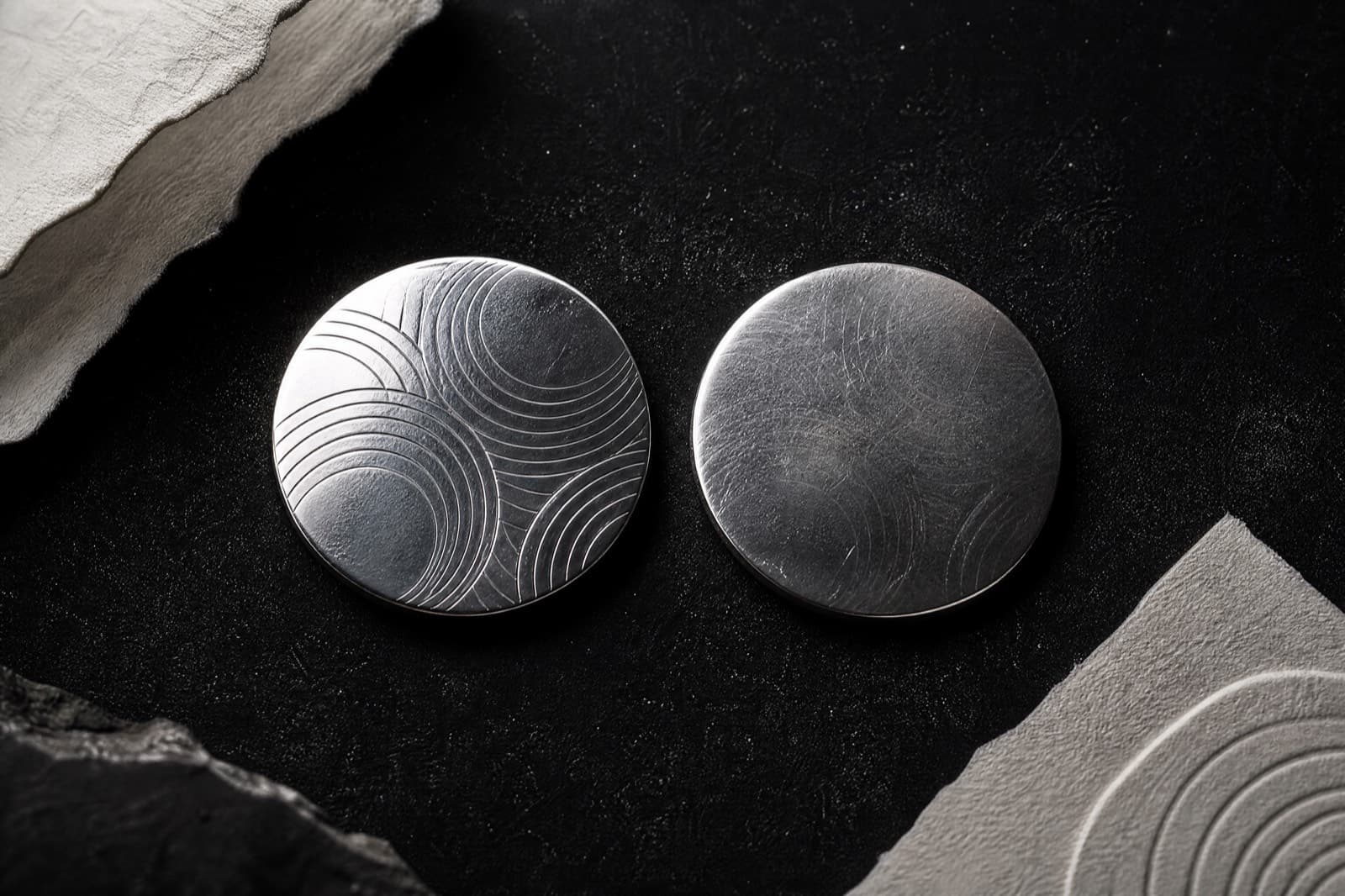
These two methods work on the surface of the metal, so care makes a real difference to how long they last rather than merely to how they look. Three things help:
- Wash and dry rather than polish. Never use an impregnated cloth over the mark.
- Take the piece off for anything abrasive. An outer ring face is exposed to everything.
- Do not have it professionally polished at all unless something else has gone wrong.
Even so, a surface mark on a ring worn every day will grow fainter. We tell you that when you choose it on the methods page, and it is not a fault when it happens. If it matters to you that the mark outlives the wearing, choose hand or machine engraving.
Particular pieces
- Spinner ring — rinse and dry the moving band now and then. Grit between the band and the core is what wears it.
- Locket — keep water out of the hinge, and dry it open. Trim any photograph to fit rather than forcing it.
- Cufflinks and tie bars — worn against cloth rather than skin, so they stay sharper for longer than anything else we make. Still worth keeping them apart in the box.
- Christening bangle — a keepsake to keep. Store it dry and out of a wool-lined box.
- Chain pieces — the chain fails long before the disc does. Check the clasp and the jump ring once a year; both are cheap to replace and expensive to lose.
Anything you are unsure about, ask before you try it. We would far rather answer an email than repair a piece someone cleaned with the wrong thing.